Illustration of mesenchymal stem cells against a dark background

Stem cell therapy for degenerative disc disease in Tijuana

Image-guided injection into the segment that actually hurts, using umbilical cord stem cells verified in our own lab first. Eight minutes from the San Diego border, and we publish what it costs.

  • Ultrasound and fluoroscopy guided
  • Every cell batch verified on site
  • COFEPRIS licensed clinic

Talk to our team

Tell us where the pain is and what your imaging shows. We will call you back. No cost, no obligation.

Renovo Clinic is a cash-pay clinic in Tijuana, Mexico. We do not bill US insurance.

Renovo Clinic in Tijuana

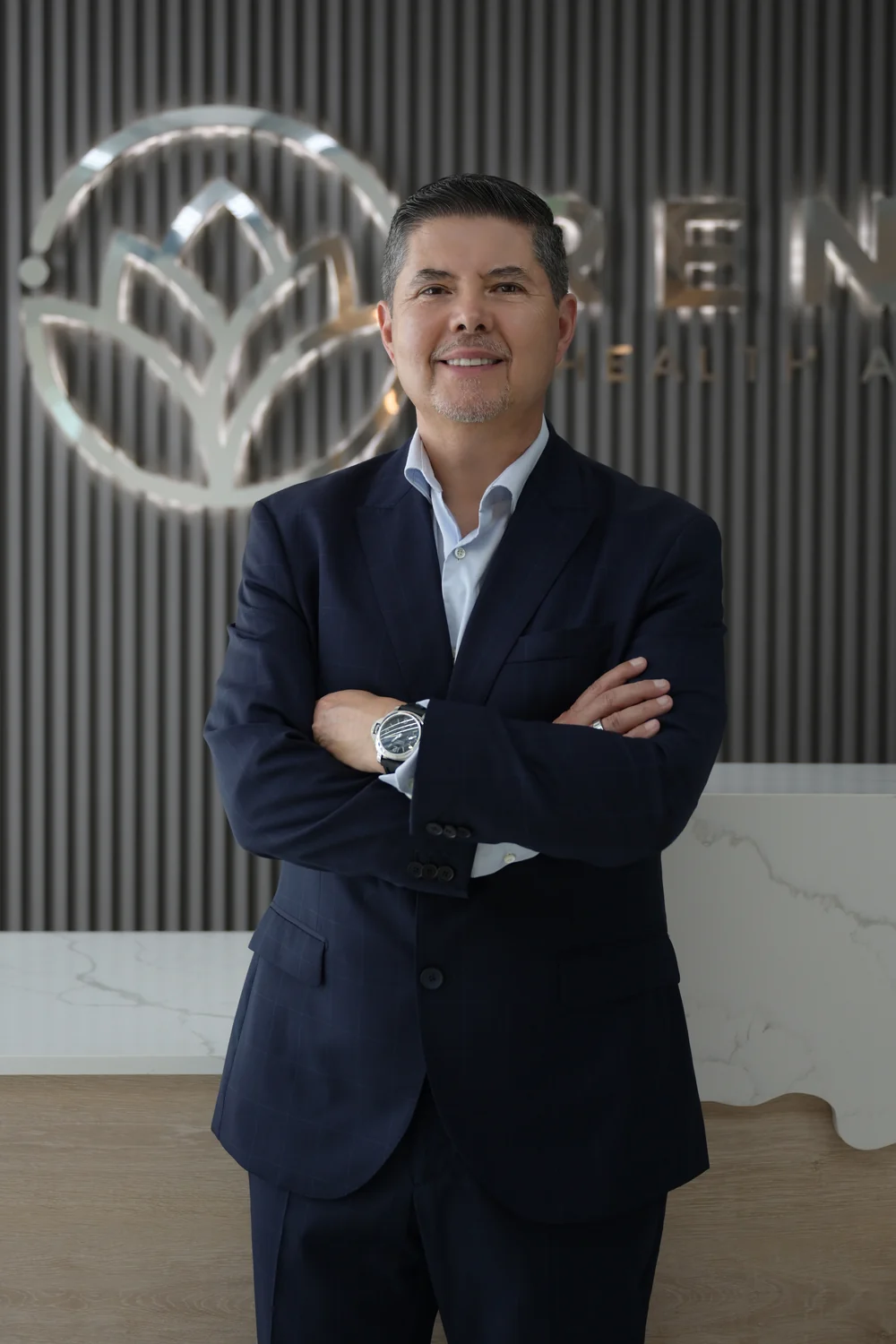
Meet Dr. José A. Jiménez

Founder and Medical Director of Renovo Clinic. He performs the injections himself, sets every protocol, and he is the one who decides whether a patient is a candidate.

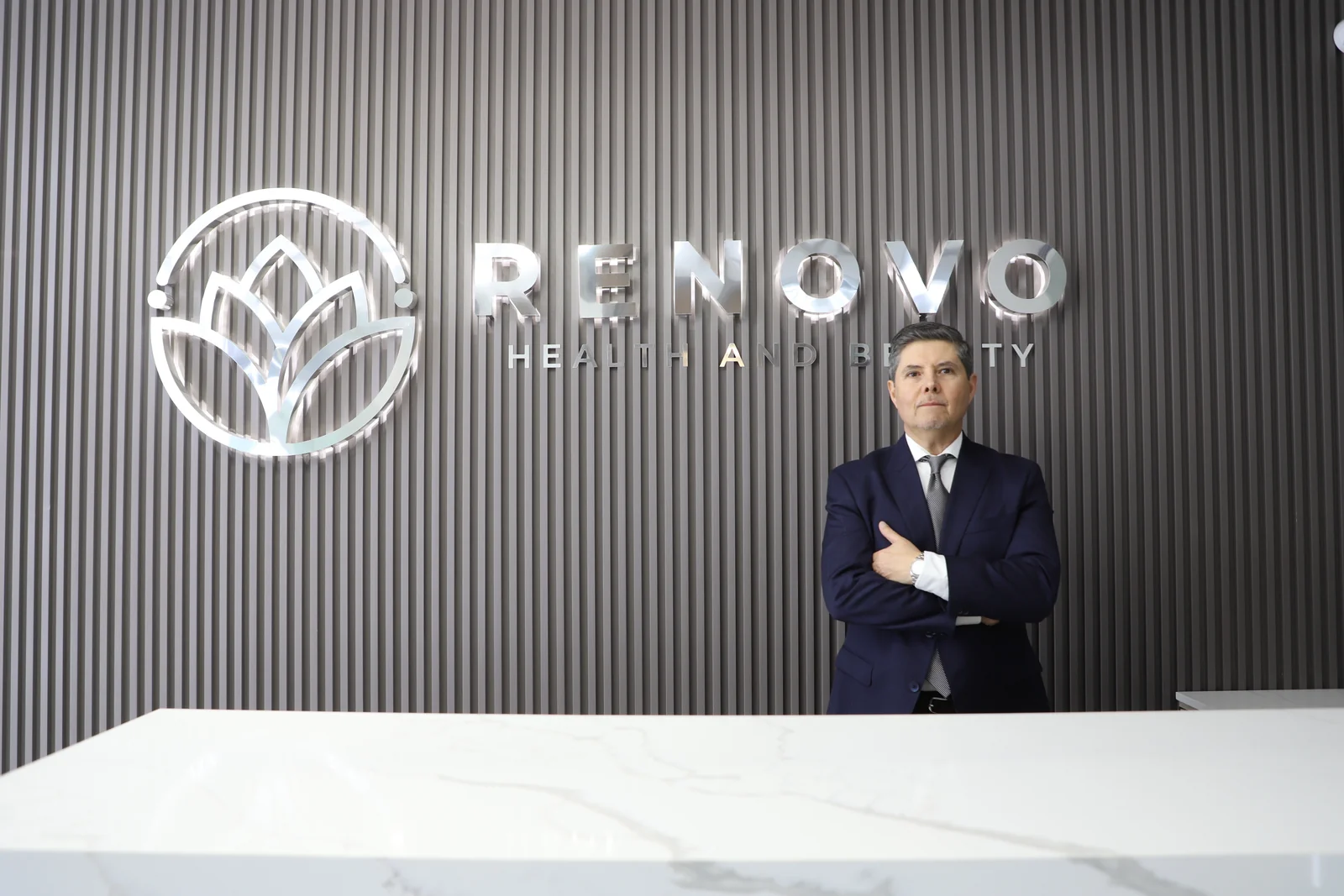
Dr. José A. Jiménez at the reception desk of Renovo Clinic in Tijuana
  • 30+ yearsIn medical practice
  • 8 minutesFrom the US border to our door
  • Image-guidedUltrasound or fluoroscopy on every targeted injection
  • $2,100–$9,900Published stem cell price range

What degenerative disc disease actually is

The discs between your vertebrae are mostly water. They work as spacers and shock absorbers, and they let your spine bend without grinding bone on bone. With age they lose water content, flatten, and stop cushioning as well as they did.

That is degeneration, and to a degree it happens to everyone. It becomes degenerative disc disease when the flattened disc starts producing symptoms: back or neck pain that comes in waves, stiffness first thing in the morning, pain that worsens when you sit or bend and eases when you walk, and sometimes numbness, tingling or weakness running into an arm or leg.

Once a disc has lost height, the load it used to carry shifts onto the facet joints behind it. That is why so many imaging reports read "degenerative disc and facet disease" together, and why the pain often spreads beyond the original level.

Inflammation is what turns a worn disc into a painful one. It is also the part that treatment can realistically influence.


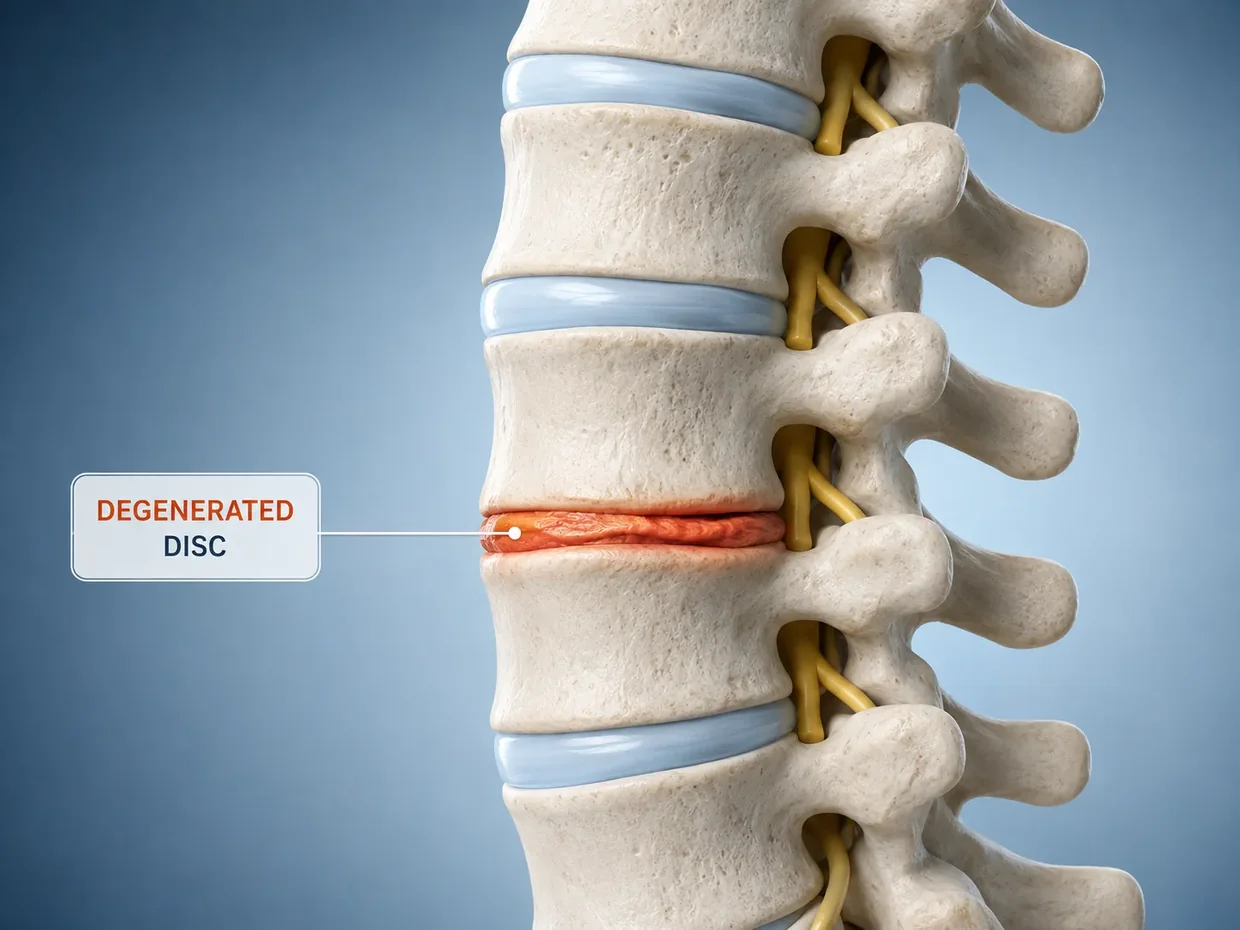
Medical illustration of the lumbar spine with one degenerated intervertebral disc highlighted in red between two vertebrae
A degenerated lumbar disc — flattened and inflamed, with the vertebrae above and below drawn closer together. L4–L5 and L5–S1 are the levels we see most often.

Bulging disc, herniated disc, stenosis — which do you actually have?

These get used interchangeably and they are not the same thing. The distinction matters, because it changes what treatment can reasonably do for you.

What the terms mean

  • Degenerative disc disease. The disc has dried out and lost height. Pain comes from the disc itself and from the extra load transferred to nearby joints.
  • Bulging or protruding disc. The disc wall is intact but pushed outward past its normal edge, often across a broad area. Common, and frequently found on scans of people with no pain at all.
  • Herniated or slipped disc. The outer wall has torn and inner material has escaped. More likely to press on a nerve root, which is where leg or arm pain, numbness and weakness come from.
  • Spinal stenosis. The canal carrying the spinal cord and nerve roots has narrowed. Classically causes leg pain and heaviness on walking that eases when you sit or lean forward.
  • Facet joint disease. Arthritis in the small joints behind the disc. Often develops after disc height is lost, and commonly reported alongside DDD.

What that means for treatment here

Our protocol targets the inflammatory and degenerative side of the problem. It works within the disc and joint environment, not on the mechanical structure of your spine.

So it may be appropriate where pain is driven by a degenerated, inflamed disc and the surrounding joints. It is less likely to help where a large fragment is compressing a nerve root, where stenosis is severe, or where there is instability or a neurological deficit that is getting worse. Those situations need a spine surgeon, and we will say so.

Bring your MRI report to the consultation. It is the single most useful thing you can give us. The level, the grade, and whether a nerve root is involved will tell us more in five minutes than a phone description will in half an hour.

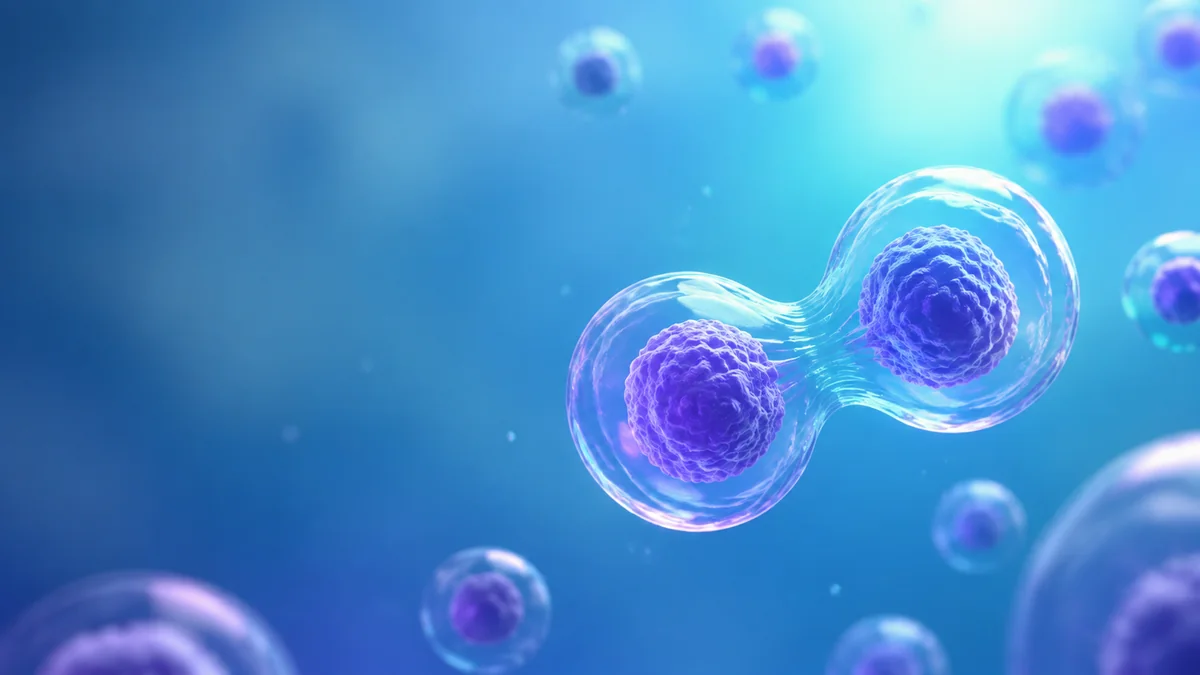
Mesenchymal stem cells dividing, rendered against a dark background

How the treatment is meant to work

For orthopaedic and musculoskeletal conditions, including disc disease, Renovo uses mesenchymal stem cells from human umbilical cord tissue. Here is what they are being asked to do.

Support the disc environment

Mesenchymal stem cells release factors that support the cells already living in the disc and the surrounding soft tissue. The realistic aim is a better environment for the tissue you still have, not the regrowth of a disc you have already lost.

Damp the inflammation

Inflammation is what makes a worn disc hurt, and it is self-sustaining once it starts. These cells are used for their capacity to modulate that response, which is the part most closely tied to how patients actually feel.

Put it in the right place

None of the above matters if the injection lands in the wrong tissue. Targeted injections here are guided by ultrasound or fluoroscopy so placement is confirmed against your anatomy rather than estimated from landmarks.

Stem cell therapy for disc disease is an area of active research. Outcomes vary between individuals and no result is guaranteed. Everything on this page is offered following a medical evaluation.

Where this sits alongside injections, physical therapy and surgery

Most people who contact us have already tried something. Anti-inflammatories, physical therapy, chiropractic, epidural steroid injections, radiofrequency ablation. Often several, over years.

We do not ask you to abandon any of it. Physical therapy in particular tends to work better after pain has come down, not instead of addressing it, and we would rather you keep that going. What we offer is a different mechanism aimed at the inflammatory environment in and around the disc, delivered as a defined protocol over a short stay.

On surgery: fusion and disc replacement are real options with real evidence behind them for the right patient, and we are not going to tell you otherwise. What we would say is that both are difficult to undo, so it is reasonable to ask what a less invasive option can do first — provided nobody is overselling it to you. If your imaging shows something that needs a surgeon, we will tell you that instead of taking your booking.

What you actually receive

  • Umbilical cord tissue MSCs. Mesenchymal stem cells derived from Wharton's jelly, from healthy full-term donations, processed in GMP-grade laboratory facilities.
  • Expansion in certified outside laboratories. We do not expand cells on our premises. All cell products are expanded and quality-tested in certified, licensed biotechnology laboratories under regulatory standards before shipment to us.
  • An independent check on arrival. Using on-site laboratory equipment we perform our own secondary cell count and confirm viability before any batch is administered. It is a second opinion on the product you are paying for.
  • Image-guided placement. Targeted and intra-articular injections are guided by ultrasound or fluoroscopy for accurate anatomical placement, rather than placed by feel.
  • A dedicated Procedure Room where the protocol needs one. Higher-complexity applications take place there. Other ultrasound-guided injections may be done in a standard clinical examination room, depending on the target.
  • Screening that can end in a no. Every medical history is reviewed. Candidates with contraindications, or with structural damage beyond what this can reasonably address, are declined or referred on.

What disc treatment costs

$2,100–$9,900USD · stem cell therapy component

Most clinics in this market will not put a number on a page. That leaves you calling around for quotes, which is a bad way to make a medical decision. So here is ours.

  • What sets your figure inside that range. Cell quantity, how many levels are being treated, the delivery route, and the clinical setting the protocol requires.
  • Multilevel costs more than single level. If your report reads L4–L5 and L5–S1 rather than one segment, expect that to be reflected.
  • Comprehensive protocols run above the range. We usually combine stem cells with supportive therapies to assist recovery. That is a package, and it adjusts the total.
  • We are cash-pay. Renovo does not bill US insurance. You will have a written figure before you commit to anything.
Get a written quote for your case
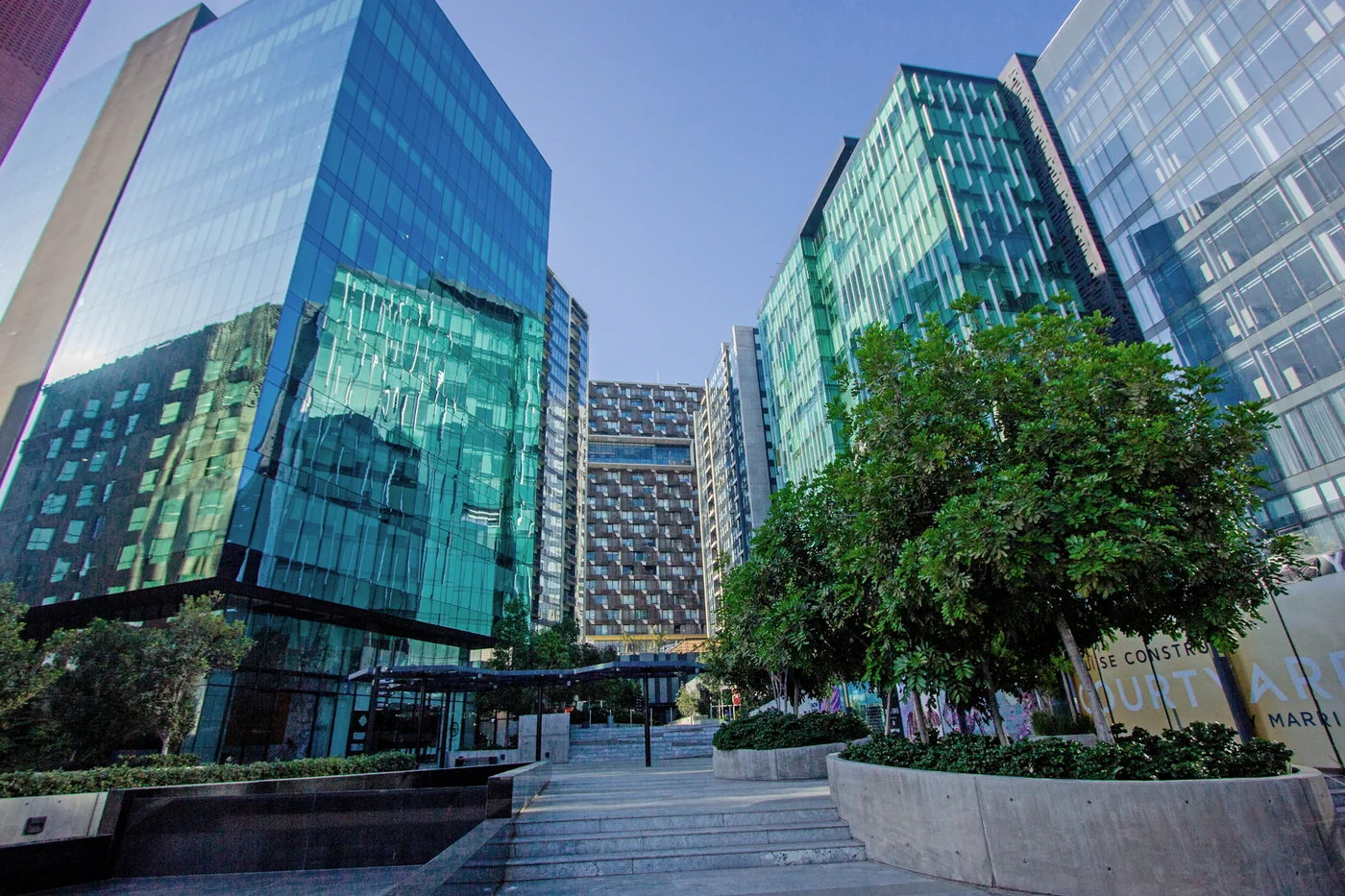
The glass towers of the Central Toreo complex in Tijuana, where Renovo Clinic is located

Central Toreo, Tijuana. Renovo Clinic is on the sixth floor, about eight minutes from the border crossing.

Planning your visit from San Diego

Most of our patients drive down from Southern California. If sitting is what aggravates your back, the shape of the trip matters, so here it is in advance.

  1. Send us your imaging first

    We review your MRI or CT report, your history and what you have already tried, by phone or WhatsApp. You find out whether you are a candidate before you book any travel.

  2. Crossing the border

    Renovo sits in the Central Toreo complex, roughly eight minutes from the crossing. Bring a valid passport or passport card. Tell us your arrival window and we will help you plan around traffic at San Ysidro and Otay Mesa.

  3. Examination on the day

    Dr. Jiménez examines you, reviews the imaging against what he finds, and confirms the levels to be treated. If the picture has changed, the plan changes with it.

  4. The injection

    Your cell batch is counted and viability-checked on site first. Placement is guided by ultrasound or fluoroscopy, in the Procedure Room or a clinical examination room depending on the target.

  5. Recovery and going home

    You rest under observation before discharge. Expect some soreness at the injection site for a few days. We give you written aftercare instructions, including when to restart physical therapy, and stay reachable on WhatsApp once you are home.

Questions we get asked

Can stem cells regrow a degenerated disc?

Be careful with anyone who promises that. Research into disc regeneration is genuinely active and some studies report improvements in disc height and pain scores, but the honest position is that the goal here is a better environment for the tissue you still have and a reduction in the inflammation driving your symptoms. Rebuilding a disc that has already collapsed is not what we are claiming.

I have a bulging disc, not DDD. Is this the same treatment?

Related but not identical. A bulging disc with an intact wall, in a segment that is also degenerating, may be appropriate. A herniation pressing hard on a nerve root, or severe stenosis, usually is not. Your MRI report settles it, which is why we ask for it before you travel.

Will this let me avoid fusion surgery?

We cannot promise that and we would not try. Some patients get enough relief that surgery stops being the obvious next step; others do not, and some are told at screening that they should see a spine surgeon rather than us. What we can say is that this does not close off surgical options later.

What kind of stem cells do you use?

For orthopaedic and musculoskeletal work, mesenchymal stem cells from human umbilical cord tissue, taken from healthy full-term donations and processed in GMP-grade laboratory facilities. Neurological protocols at Renovo use a different cell type.

Where do the cells come from, and are they tested?

Cell products are expanded and quality-tested in certified, licensed biotechnology laboratories under regulatory standards, then shipped to us. We do not expand cells on site. What we do on site is verify them: an independent secondary cell count and a viability check on every batch before it is administered.

How much does it cost, and does insurance cover it?

The stem cell component generally runs from $2,100 to $9,900 USD depending on the protocol, the number of levels treated and the clinical setting required. Comprehensive packages that combine stem cells with supportive therapies cost more. Renovo is a cash-pay clinic in Mexico and does not bill US insurance. You receive a written figure before committing.

How long should I plan to be in Tijuana, and what is recovery like?

Length of stay depends on your protocol and is settled during the pre-travel consultation rather than guessed at here. Most people should expect soreness around the injection site for a few days. We give written aftercare instructions covering activity and when to resume physical therapy.

Could I be turned down?

Yes. Every patient's medical history is screened, and our clinical team declines or postpones candidates where there is a contraindication such as an active uncontrolled infection or medical instability — or where imaging shows damage beyond what this treatment could reasonably address. We would rather lose the booking.

Dr. José A. Jiménez, Medical Director of Renovo Clinic in Tijuana

About Dr. José A. Jiménez, Medical Director

He has practised medicine for more than 30 years. He is a Medical Doctor and Surgeon, a graduate of UNAM, and a Specialist in Critical Care Medicine and Intensive Care, with advanced training in stem cell therapy, sports medicine and musculoskeletal ultrasound.

That ultrasound training is the relevant part for disc work. It is why targeted injections here are placed under live imaging rather than by feel, and why he sets and performs each protocol himself.

  • Medical Doctor and SurgeonUniversidad Nacional Autónoma de México · Professional License No. 1568215
  • Specialist, Critical Care Medicine and Intensive CareSpecialty License No. 3444273
  • Advanced trainingStem cell therapy · Sports medicine · Musculoskeletal ultrasound
  • Clinic health licenceCOFEPRIS-02-002-A · Advertising Notice 2402022002A00037

Start with your MRI, not a booking

Send us your imaging report and tell us what you have already tried. We will tell you honestly whether we think we can help — including when the answer is a spine surgeon instead.

Health Licence · COFEPRIS-02-002-A Advertising Notice · 2402022002A00037 Professional Licence No. 1568215 Specialty Licence No. 3444273