Mesenchymal stem cells rendered against a dark background

Stem cell therapy for hip pain in Tijuana

Image-guided injection into the hip joint using umbilical cord stem cells verified in our own lab first. Eight minutes from the San Diego border, and we publish what it costs.

  • Ultrasound and fluoroscopy guided
  • Every cell batch verified on site
  • COFEPRIS licensed clinic

Get in touch

Send us a message and our team will get back to you shortly. No cost, no obligation.

Renovo Clinic is a cash-pay clinic in Tijuana, Mexico. We do not bill US insurance.

Renovo Clinic in Tijuana

Meet Dr. José A. Jiménez

Founder and Medical Director of Renovo Clinic. He performs the injections himself, sets every protocol, and he is the one who decides whether a patient is a candidate.

Dr. José A. Jiménez at the reception desk of Renovo Clinic in Tijuana
  • 30+ yearsIn medical practice
  • 8 minutesFrom the US border to our door
  • Image-guidedUltrasound or fluoroscopy on every targeted injection
  • $2,100–$9,900Published stem cell price range

What stem cell therapy for hips actually is

Living with hip pain affects your mobility and your quality of life. Whether it comes from arthritis, a labral tear or degenerative joint disease, it can make simple movements uncomfortable.

Stem cell therapy for the hip is a regenerative treatment that introduces mesenchymal stem cells into the joint. These cells release factors that support the tissue already there and modulate the inflammation driving your symptoms. The aim is to preserve and support existing joint tissue rather than remove or replace it.

Because it works through injection rather than an incision, recovery is typically shorter than surgery and the joint is left intact. That is what makes it worth considering before a replacement, provided your imaging supports it.

Inflammation is what turns a worn joint into a painful one. It is also the part treatment can most realistically influence.

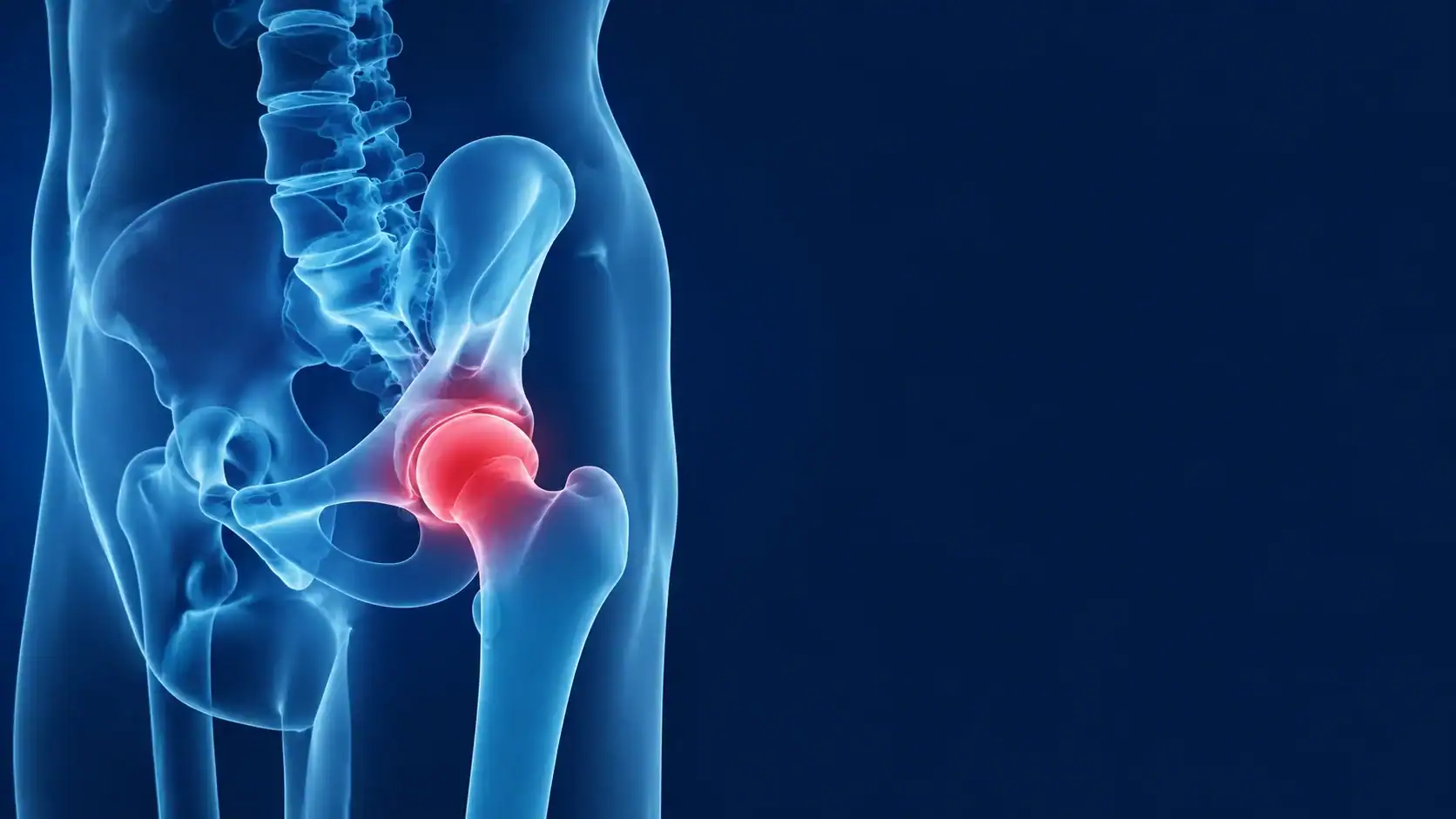
Anatomical illustration of the hip joint with the ball-and-socket articulation highlighted in red to indicate pain and inflammation
The ball-and-socket joint, with the inflamed articulation highlighted. Pain is usually felt deep in the groin rather than on the outside of the hip.

Which hip problem do you actually have?

These get treated as one thing and they are not. The distinction changes what treatment can reasonably do for you.

What the terms mean

  • Hip osteoarthritis. Cartilage inside the joint breaks down over time, reducing the cushion between the ball and socket and eventually leading to bone-on-bone contact.
  • Labral tear. The labrum is a ring of cartilage that seals and stabilises the socket. A tear can cause sharp, catching pain and a sense of the joint giving way.
  • Trochanteric bursitis. Inflammation of the fluid-filled sac on the outer hip. Pain is on the side rather than deep in the groin, and it is often worse lying on that side.
  • Degenerative joint disease. The broader term for age and load-related wear across cartilage, bone and surrounding soft tissue.
  • Avascular necrosis. Loss of blood supply to the femoral head. This one behaves differently from the others and needs its own assessment.

What that means for treatment here

Our protocol targets the inflammatory and degenerative side of the problem. It works within the joint environment, not on the mechanical structure of your hip.

So it may be appropriate for mild to moderate osteoarthritis, soft tissue injury including labral damage, and bursitis. It is less likely to help where cartilage loss is advanced and the joint is already bone-on-bone, where there is significant structural collapse, or where deformity means the mechanics themselves need correcting. Those situations need an orthopaedic surgeon, and we will say so.

Bring your X-ray or MRI report to the consultation. It is the single most useful thing you can give us. The grade of cartilage loss and whether the labrum is involved will tell us more in five minutes than a phone description will in half an hour.

How the treatment is meant to work

For orthopaedic conditions, including the hip, Renovo uses mesenchymal stem cells from human umbilical cord tissue. Here is what they are being asked to do.

Support the joint environment

Mesenchymal stem cells release factors that support the cells already living in the cartilage and surrounding soft tissue. The realistic aim is a better environment for the tissue you still have, not the regrowth of a joint surface you have already lost.

Damp the inflammation

Inflammation is what makes a worn hip hurt, and it is self-sustaining once it starts. These cells are used for their capacity to modulate that response, which is the part most closely tied to how patients actually feel.

Put it in the right place

The hip is deep and hard to reach accurately by feel. Injections here are guided by ultrasound or fluoroscopy so placement inside the joint is confirmed against your anatomy rather than estimated from surface landmarks.

Stem cell therapy for hip conditions is an area of active research. Outcomes vary between individuals and no result is guaranteed. Everything on this page is offered following a medical evaluation.

Where this sits alongside hip replacement

Most people who contact us have already tried something. Anti-inflammatories, physical therapy, cortisone injections, activity modification. Often several, over years.

On surgery: hip replacement is a genuinely good operation with strong evidence behind it for the right patient, and we are not going to tell you otherwise. What we would say is that it is difficult to undo, so it is reasonable to ask what a less invasive option can do first — provided nobody is overselling it to you.

This treatment does not close off surgical options later. If your imaging shows a joint that needs replacing, we will tell you that instead of taking your booking. And we do not ask you to stop physical therapy; it tends to work better once pain has come down, so we would rather you keep it going.


What you actually receive

  • Umbilical cord tissue MSCs. Mesenchymal stem cells derived from Wharton's jelly, from healthy full-term donations, processed in GMP-grade laboratory facilities.
  • Expansion in certified outside laboratories. We do not expand cells on our premises. All cell products are expanded and quality-tested in certified, licensed biotechnology laboratories under regulatory standards before shipment to us.
  • An independent check on arrival. Using on-site laboratory equipment we perform our own secondary cell count and confirm viability before any batch is administered. It is a second opinion on the product you are paying for.
  • Image-guided placement. Intra-articular injection into the hip is guided by ultrasound or fluoroscopy for accurate anatomical placement, rather than placed by feel.
  • A dedicated Procedure Room where the protocol needs one. Higher-complexity applications take place there. Other ultrasound-guided injections may be done in a standard clinical examination room, depending on the target.
  • Screening that can end in a no. Every medical history is reviewed. Candidates with contraindications, or with joint damage beyond what this can reasonably address, are declined or referred on.

What hip treatment costs

$2,100–$9,900USD · stem cell therapy component

Most clinics in this market will not put a number on a page. That leaves you calling around for quotes, which is a bad way to make a medical decision. So here is ours.

  • What sets your figure inside that range. Cell quantity, whether one hip or both are being treated, the delivery route, and the clinical setting the protocol requires.
  • Both hips cost more than one. If your imaging shows bilateral disease, expect that to be reflected.
  • Comprehensive protocols run above the range. We usually combine stem cells with supportive therapies to assist recovery. That is a package, and it adjusts the total.
  • We are cash-pay. Renovo does not bill US insurance. You will have a written figure before you commit to anything.
Get a written quote for your case
The glass towers of the Central Toreo complex in Tijuana, where Renovo Clinic is located

Central Toreo, Tijuana. Renovo Clinic is on the sixth floor, about eight minutes from the border crossing.

Planning your visit from San Diego

Most of our patients drive down from Southern California. If walking or sitting for long stretches aggravates your hip, the shape of the trip matters, so here it is in advance.

  1. Send us your imaging first

    We review your X-ray or MRI report, your history and what you have already tried, by phone or WhatsApp. You find out whether you are a candidate before you book any travel.

  2. Crossing the border

    Renovo sits in the Central Toreo complex, roughly eight minutes from the crossing. Bring a valid passport or passport card. Tell us your arrival window and we will help you plan around traffic at San Ysidro and Otay Mesa.

  3. Examination on the day

    Dr. Jiménez examines the hip, reviews the imaging against what he finds, and confirms the plan. If the picture has changed, the plan changes with it.

  4. The injection

    Your cell batch is counted and viability-checked on site first. Placement into the joint is guided by ultrasound or fluoroscopy, under local anaesthesia.

  5. Recovery and going home

    You rest under observation before discharge. Expect some soreness around the joint for a few days. Most patients are comfortable travelling home within 24 to 48 hours. We give you written aftercare instructions, including when to restart physical therapy, and stay reachable on WhatsApp.

Questions we get asked

What is the recovery time after a stem cell injection for hip pain?

Most patients resume light activity within a few days. Minor soreness around the joint is common at first. Any improvement tends to come gradually over the following months rather than immediately, and it varies between individuals.

Is the procedure painful?

The injection is performed under local anaesthesia, with mild sedation available. Discomfort is usually minimal and short-lived. Because placement is guided by ultrasound or fluoroscopy rather than by feel, there is less probing to find the joint.

How long do results last?

This varies with the severity of joint damage and your activity levels, and we cannot promise a duration. Some patients discuss follow-up treatment later. Anyone quoting you a guaranteed number of years is guessing.

Can stem cells help with a torn labrum?

It may be appropriate for labral damage where the joint is otherwise reasonably preserved, and it is one of the more common reasons people ask about this treatment. A large tear causing mechanical locking is a surgical problem. Your MRI report settles which situation you are in, which is why we ask for it before you travel.

Are there any risks?

Any injection into a joint carries some risk, including infection, bleeding and a temporary flare of pain. Every patient's medical history is screened beforehand, the procedure is performed under sterile conditions, and every cell batch is verified on site before administration.

When can I travel after treatment?

Most patients are comfortable travelling home within 24 to 48 hours. You receive written post-treatment instructions before you leave, and we stay reachable on WhatsApp once you are back.

Is stem cell therapy right for severe hip arthritis?

Often not. Where cartilage loss is advanced and the joint is already bone-on-bone, this treatment is unlikely to give you what you want, and we would rather tell you that than take the booking. A consultation and your imaging will settle it.

What kind of stem cells do you use?

For orthopaedic work, mesenchymal stem cells from human umbilical cord tissue, taken from healthy full-term donations and processed in GMP-grade laboratory facilities. Cell products are expanded and quality-tested in certified, licensed biotechnology laboratories before shipment to us. We do not expand cells on site; what we do on site is verify them.

Dr. José A. Jiménez, Medical Director of Renovo Clinic in Tijuana

About Dr. José A. Jiménez, Medical Director

He has practised medicine for more than 30 years. He is a Medical Doctor and Surgeon, a graduate of UNAM, and a Specialist in Critical Care Medicine and Intensive Care, with advanced training in stem cell therapy, sports medicine and musculoskeletal ultrasound.

That ultrasound training is the relevant part for hip work. The joint sits deep beneath muscle, which is why injections here are placed under live imaging rather than by feel, and why he performs them himself.

  • Medical Doctor and SurgeonUniversidad Nacional Autónoma de México · Professional License No. 1568215
  • Specialist, Critical Care Medicine and Intensive CareSpecialty License No. 3444273
  • Advanced trainingStem cell therapy · Sports medicine · Musculoskeletal ultrasound
  • Clinic health licenceCOFEPRIS-02-002-A · Advertising Notice 2402022002A00037

Start with your imaging, not a booking

Send us your X-ray or MRI report and tell us what you have already tried. We will tell you honestly whether we think we can help — including when the answer is an orthopaedic surgeon instead.

Health Licence · COFEPRIS-02-002-A Advertising Notice · 2402022002A00037 Professional Licence No. 1568215 Specialty Licence No. 3444273