


Stem Cell Therapy for Shoulder Pain in Tijuana, Mexico

Medically Reviewed by Dr. José Jiménez
Founder & Medical Director, Renovo Health & Beauty
Board-Elected Member, American Academy of Regenerative Medicine | 32+ Years of Medical Experience
Last Reviewed: September 2026.

Stem cell therapy for the shoulder is an image-guided injection of mesenchymal stem cells (MSCs) into or around an injured tendon or joint, most often considered for rotator cuff tendinopathy, partial tears, and shoulder arthritis. The research is promising but early: the strongest long-term results come from stem cells added during surgical rotator cuff repair, while stand-alone injections have been studied in small trials. Renovo evaluates every shoulder case individually.

Get in Touch

Send us a message and our team will get back to you shortly.

Key Facts: Shoulder Stem Cell Therapy at Renovo

Shoulder Conditions That May Be Evaluated

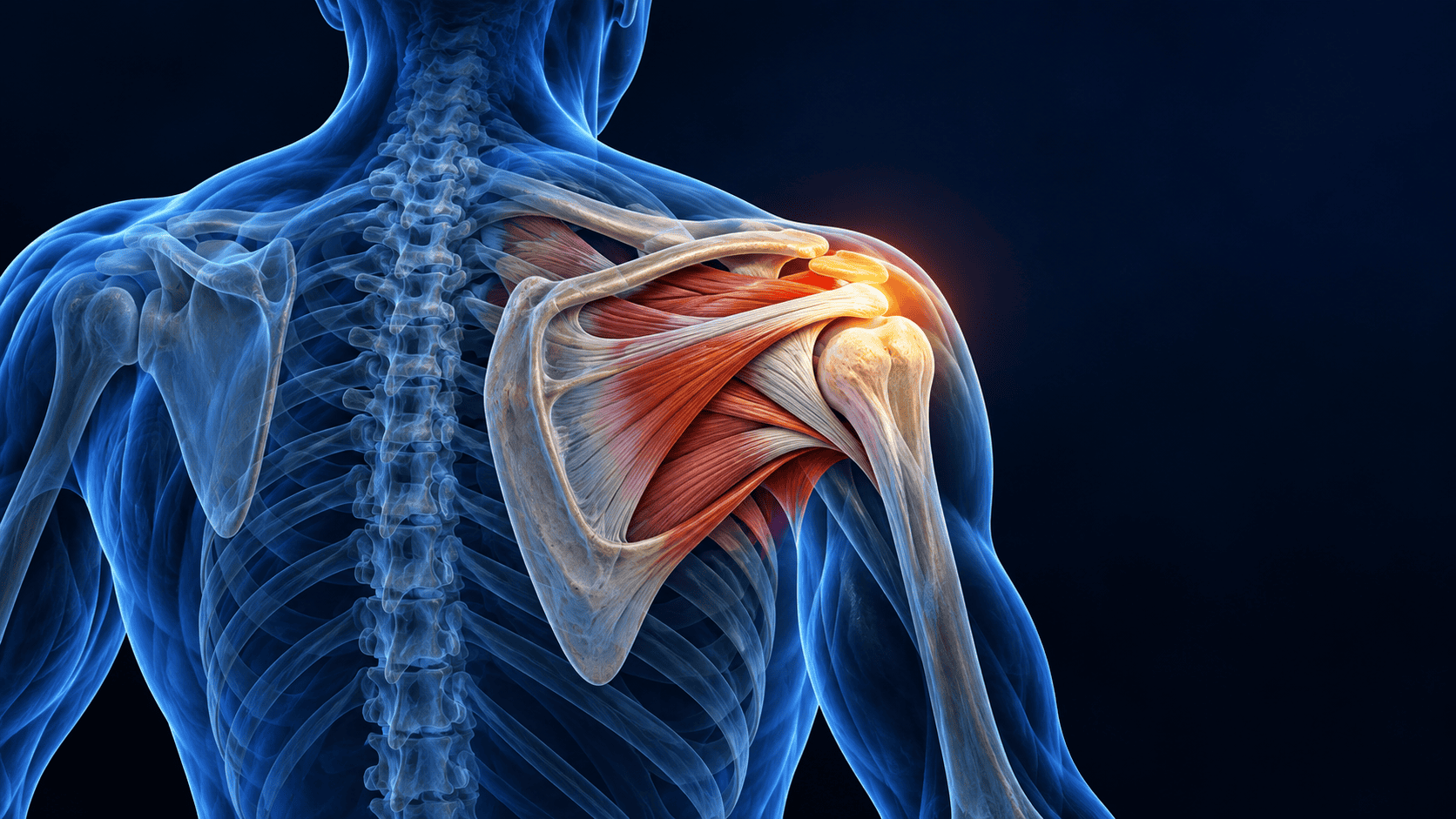
The shoulder is the most mobile joint in the body, and its stability depends on the rotator cuff—four muscles and tendons that hold the ball of the upper arm in its socket. Dr. Jiménez may evaluate stem cell therapy for:

Large, full-thickness, or retracted rotator cuff tears often need surgical repair, and Renovo will refer you for a surgical opinion when that is the better option. Shoulder pain can also start in the neck: a pinched nerve in the cervical spine can cause pain and tingling that travel down the arm (Harvard Health Publishing). If your exam points to the neck, read about stem cell therapy for neck pain.

Get in Touch

Send us a message and our team will get back to you shortly.

What the Research Says About Stem Cells for the Shoulder

Stem cells added during rotator cuff surgery

The most striking shoulder data come from a case-controlled study of 90 patients undergoing arthroscopic rotator cuff repair. Forty-five patients also received a concentrate of their own bone marrow–derived MSCs at the repair site. By six months, 100% of the MSC-augmented repairs had healed versus 67% of repairs without MSCs, and at ten years, 87% of the MSC group still had intact rotator cuffs versus 44% of the control group (Hernigou et al., International Orthopaedics, 2014). This study was not randomized, and it evaluated cells added during surgery—not a stand-alone injection—so its results cannot be applied directly to non-surgical treatment.

Stand-alone injections for rotator cuff disease

Researchers have also tested injecting MSCs directly into damaged rotator cuff tendons without surgery. A first-in-human, dose-escalation trial of adipose-derived MSCs reported acceptable safety along with clinical, imaging, and arthroscopic signs of improvement at six months, and the investigators later published two-year follow-up results (Jo et al., Stem Cells, 2018). These studies were small and did not include a placebo group, so larger randomized trials are still needed.

Safety

Across 55 randomized trials involving 2,696 adults who received MSCs into the bloodstream, MSCs were linked to a higher rate of temporary fever, but not to increased infection, blood clots, death, or cancer (Thompson et al., EClinicalMedicine, 2020).

How Shoulder Stem Cell Treatment Works at Renovo

  1. Medical History & Imaging Questionnaire. Share your symptoms, prior treatments, and shoulder MRI or ultrasound.
  2. Physician review. Dr. Jiménez determines whether your shoulder is a candidate and whether a surgical opinion or rehabilitation should come first. Renovo declines or postpones treatment when contraindications—such as an active, uncontrolled infection or medical instability—would compromise safety.
  3. Cell verification. Your cells are independently re-counted and viability-tested on-site before use.
  4. Image-guided injection. Ultrasound or fluoroscopy guides placement into the affected joint, tendon, or surrounding tissue.
  5. Rehabilitation plan. Many shoulder protocols pair the injection with a structured strengthening program. Supportive options may include shockwave therapy, PRP, or care through our sports medicine team.

stem cell therapy for shoulder pain 2

Recovery After a Shoulder Stem Cell Injection

Expect soreness, stiffness, or a feeling of fullness in the shoulder for several days. Most patients use the arm for light daily tasks soon after treatment but avoid heavy lifting and repetitive overhead work until cleared. Because tendons remodel slowly, any improvement is typically assessed over weeks to months, and a consistent rehabilitation program matters as much as the injection itself.
Side Effects of a Shoulder Stem Cell Injection

Common side effects are temporary: pain at the injection site, swelling, and stiffness. As with any injection, infection and bleeding are possible but uncommon, and sterile technique and image guidance are used to reduce these risks. Tell Dr. Jiménez about blood thinners, recent infections, or other medical conditions before treatment.

Cost of Stem Cell Therapy for Rotator Cuff and Shoulder Conditions

At Renovo, stem cell–only pricing generally ranges from $2,100 to $9,900 USD. Treating one shoulder with a single targeted injection is priced differently than a protocol that treats both shoulders or adds supportive therapies. See our complete guide to stem cell therapy cost in Tijuana. Renovo operates on a self-pay model and does not bill U.S. health insurance.

Visiting Renovo From San Diego and Beyond

Renovo is located in the Central Toreo building at Av. Santa María 2750, Suite 605, 6th floor, Fracc. Calete, Tijuana, Baja California 22044—roughly 8 to 15 minutes from the U.S. border, depending on traffic. Patients flying in can use San Diego International Airport or Tijuana International Airport, which connects to the U.S. side through the Cross Border Xpress (CBX). Bring a valid passport or passport card for re-entry into the United States. Clinic hours are Monday through Friday, 9 a.m. to 6 p.m., and Saturday, 9 a.m. to 2 p.m. (Pacific Time).

You may also want to read about stem cell therapy for knees, hips, and other orthopedic conditions.

stem cell therapy for shoulder pain 3

Who Oversees Your Care

Every protocol at Renovo is overseen by Dr. José A. Jiménez, Renovo’s Medical Director. Dr. Jiménez is a Medical Doctor and Surgeon who graduated from the National Autonomous University of Mexico (UNAM) (Professional License No. 1568215) and a Specialist in Critical Care Medicine and Intensive Care (Specialty License No. 3444273), with advanced training in stem cell therapy, sports medicine, and musculoskeletal ultrasound. Renovo operates under COFEPRIS Health License COFEPRIS-02-002-A.

Start With a Shoulder Evaluation

Call (619) 407-7878, message us on WhatsApp, or request a free consultation to begin with the Medical History & Imaging Questionnaire.

Frequently Asked Questions About Stem Cell Therapy for the Shoulder

Stem cells have not been proven to heal a torn rotator cuff on their own. The strongest evidence comes from MSCs added during surgical repair, where one study found higher healing rates and fewer re-tears over ten years. Stand-alone injections show early promise in small trials.

For some partial tears and tendinopathy, an injection-based approach may be considered before surgery. Large, full-thickness, or retracted tears often need surgical repair, and Renovo recommends a surgical opinion when it is the better option.

Most patients have soreness for several days and return to light daily use of the arm soon after. Heavy lifting and repetitive overhead activity are limited until cleared, and results are generally assessed over weeks to months alongside rehabilitation.

The most common side effects are temporary injection-site pain, swelling, and stiffness. Infection and bleeding are uncommon risks of any injection. In randomized trials of MSCs delivered into the bloodstream, the main added risk was temporary fever.

At Renovo in Tijuana, stem cell–only pricing generally ranges from $2,100 to $9,900 USD. Your quote depends on whether one or both shoulders are treated, the delivery method, and any supportive therapies.

Evidence for labral tears is limited. Dr. Jiménez evaluates labral injuries case by case using MRI and a physical exam, and some labral tears are better treated with rehabilitation or surgery.

Renovo’s shoulder protocols use mesenchymal stem cells from donated umbilical cord tissue (Wharton’s jelly) from healthy, full-term births. Cells are quality-tested in certified, licensed laboratories and re-verified at Renovo before use.